Meta-Mondrian
May 2026-present.
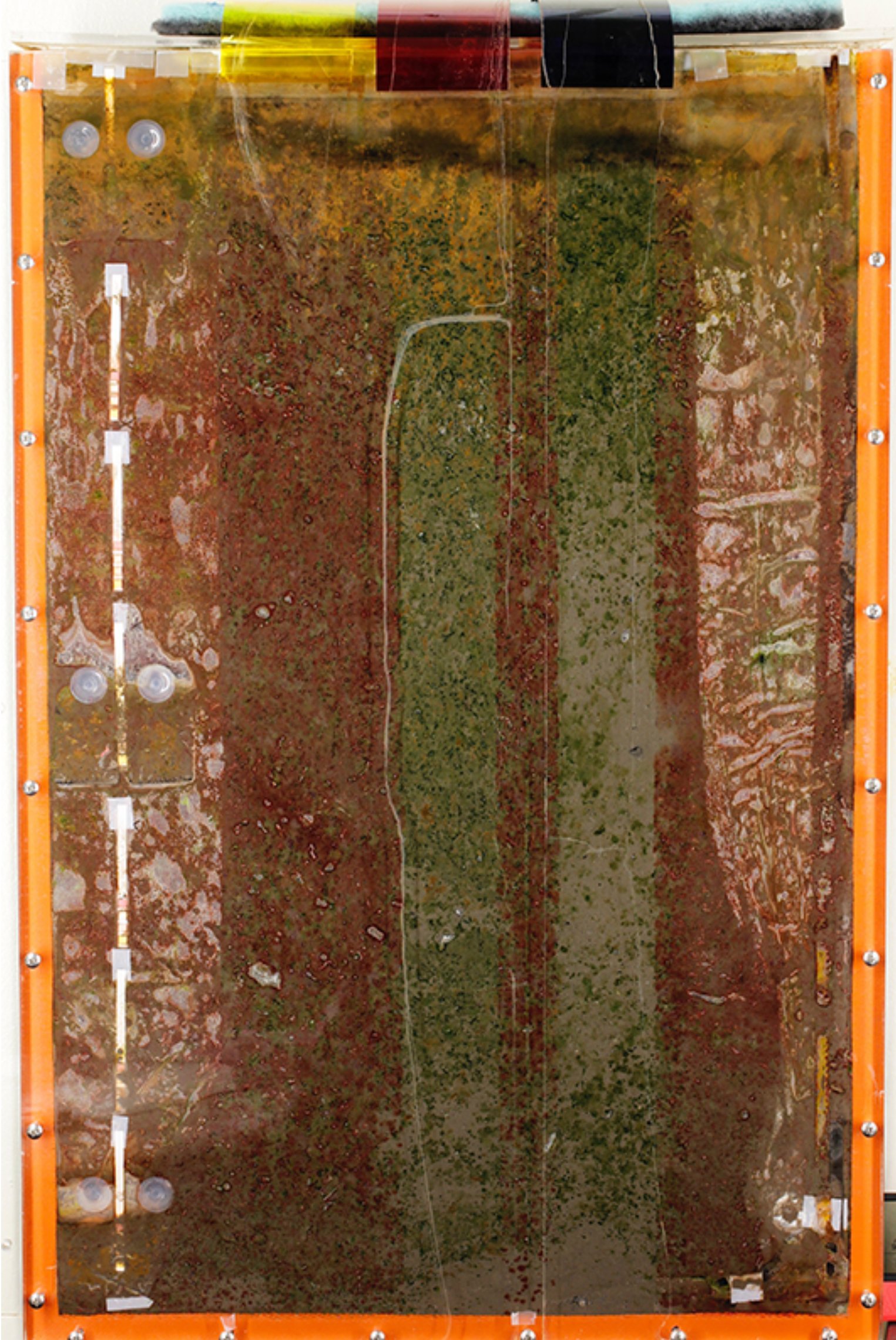
Mud painting created from samples collected around Peebles Island, Waterford, NY
Installed outside the Early Earth Laboratory as part of the Rensselaer Astrobiology Research and Education Center!
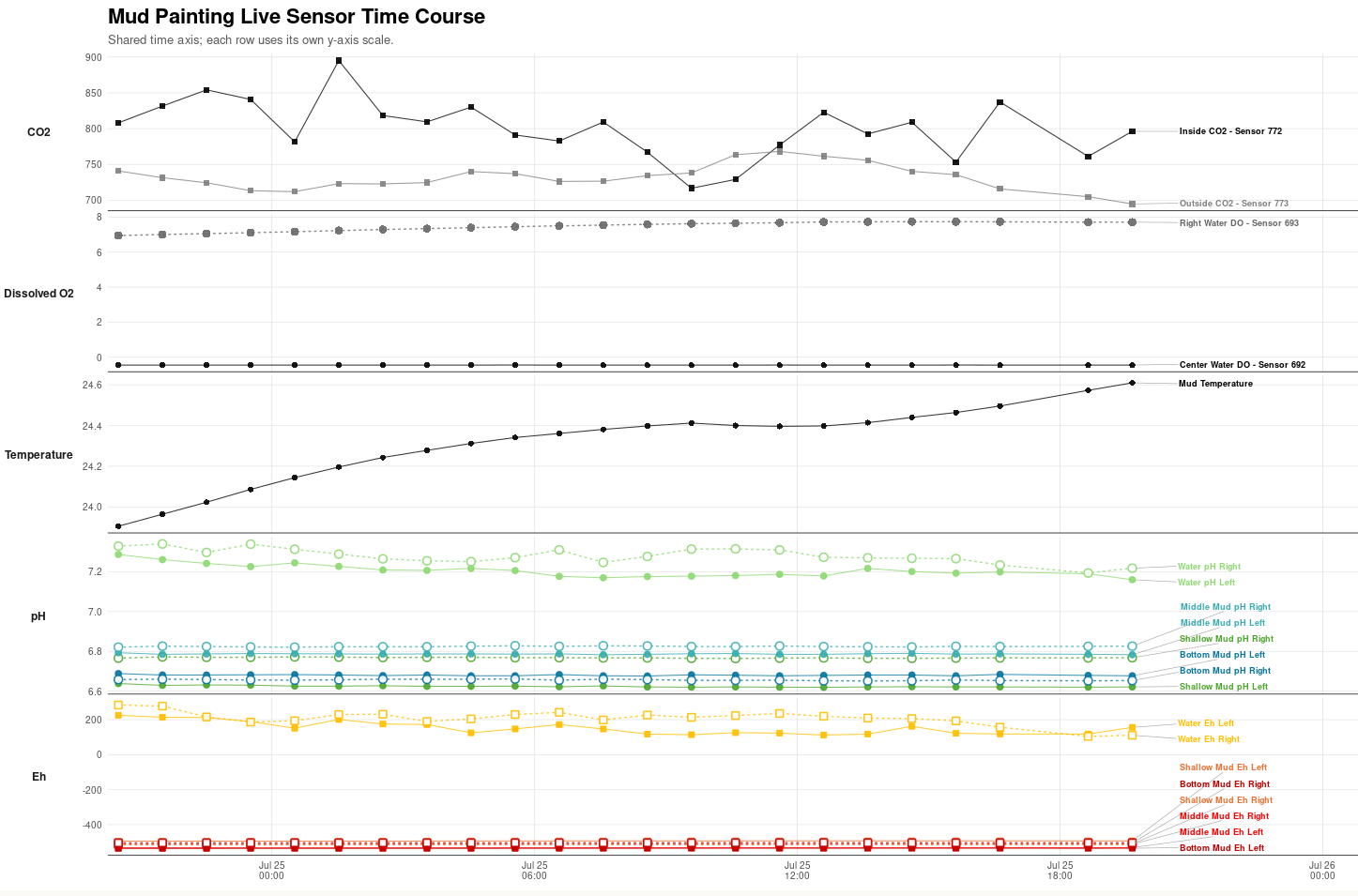
The Mud Is Alive and Streaming!
until I figure out how to embed another page, please visit:
https://jeniferwightman-metamondrianmudpainting.share.connect.posit.cloud
So much gratitude to Coburn Wightman for building code and raspberry pi and Brenda Thomson for making it publicly available!
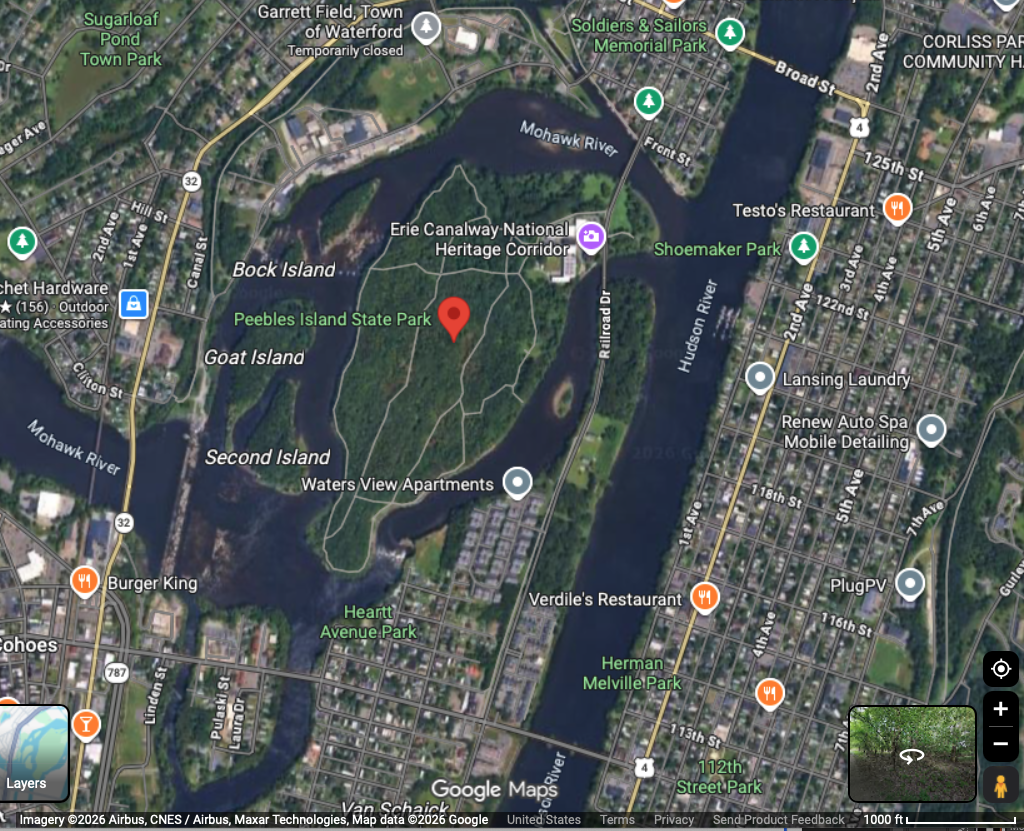
Peebles Island, May 2026
A mud painting is an aestheticized version of a “Winogradsky Column”, a 19th century method for culturing photosynthetic microbes across an oxic-anoxic transect.
The first thing I do: collect mud!
It was a rainy day in May as I walked all around Peebles Island State Park, NY (where the Mohawk River joins the Hudson River) trying to collect as many different types of soil and water samples to combine in the mix.
Art as Sampling Protocol
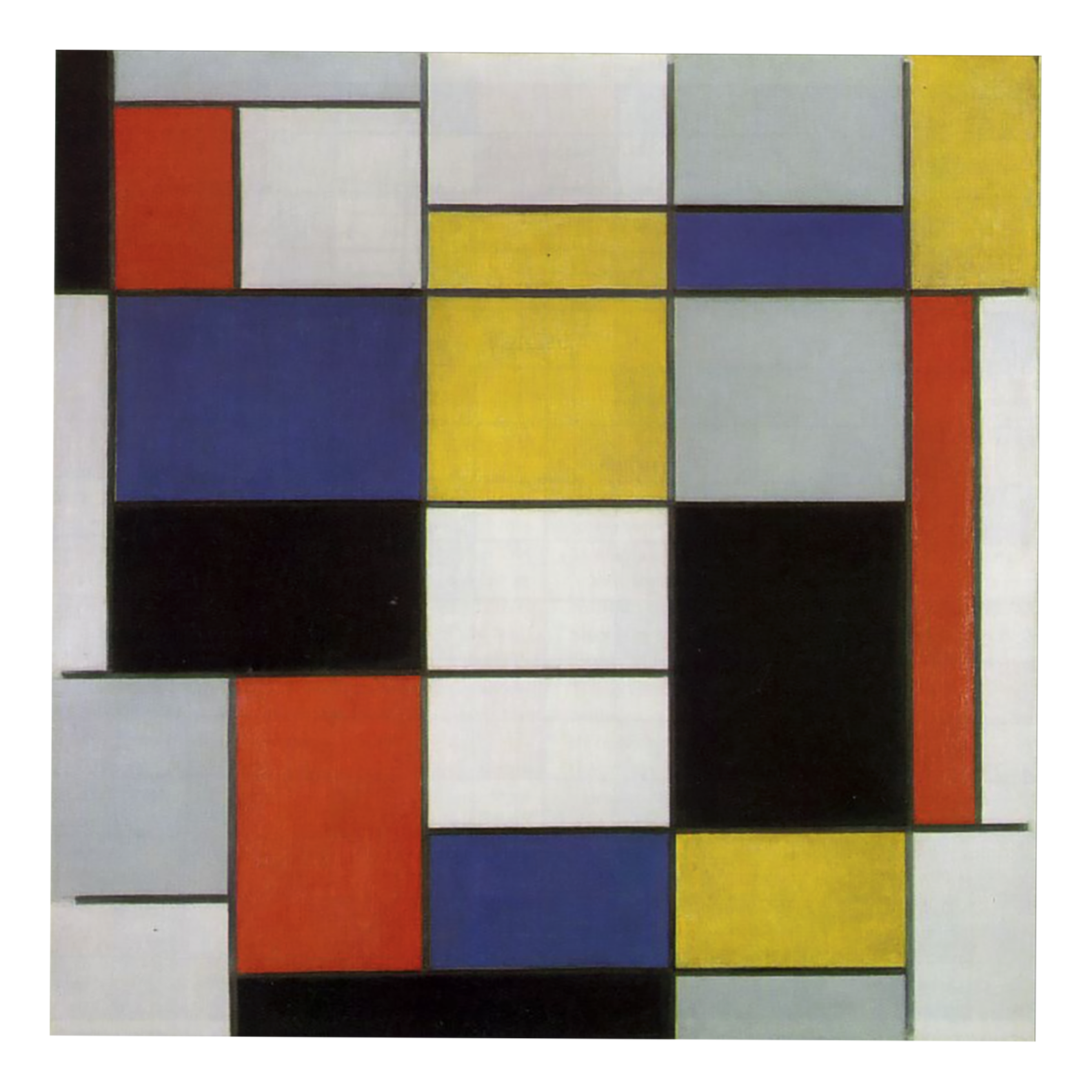
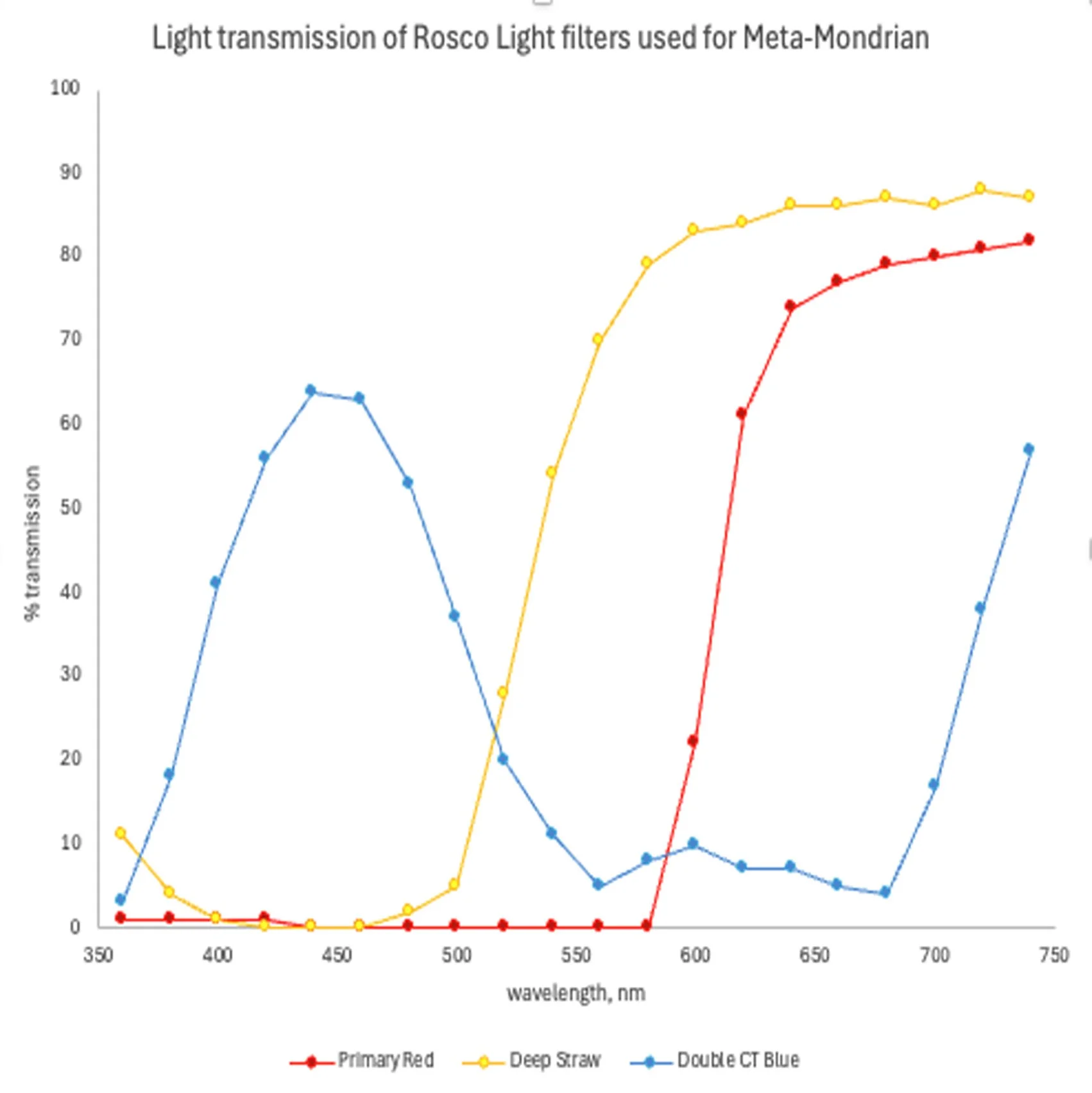
Using a 1920’s Piet Mondrian* painting as a design template, I made a laser cut^ of the black areas and fit in Rosco light filters for the Red, Yellow and Blue sections. For the grey sections, I ordered the clear film from Rosco as a control, and for the white areas I added nothing.
My goals
1) see if I get differential pigmentation.
2) Most ecological transect studies use a randomizer algothrithm to reduce bias in sampling. Why not use an artistic composition?
3) I wanted to see if microbes could paint in straight lines! wink!
I hope the last two items make you smile, bc to me those are both funny!
*Composition with Grey, Red, Yellow and Blue (1920) by Piet Mondrian
^Thanks to John Szczesniak for his help making the laser cut!
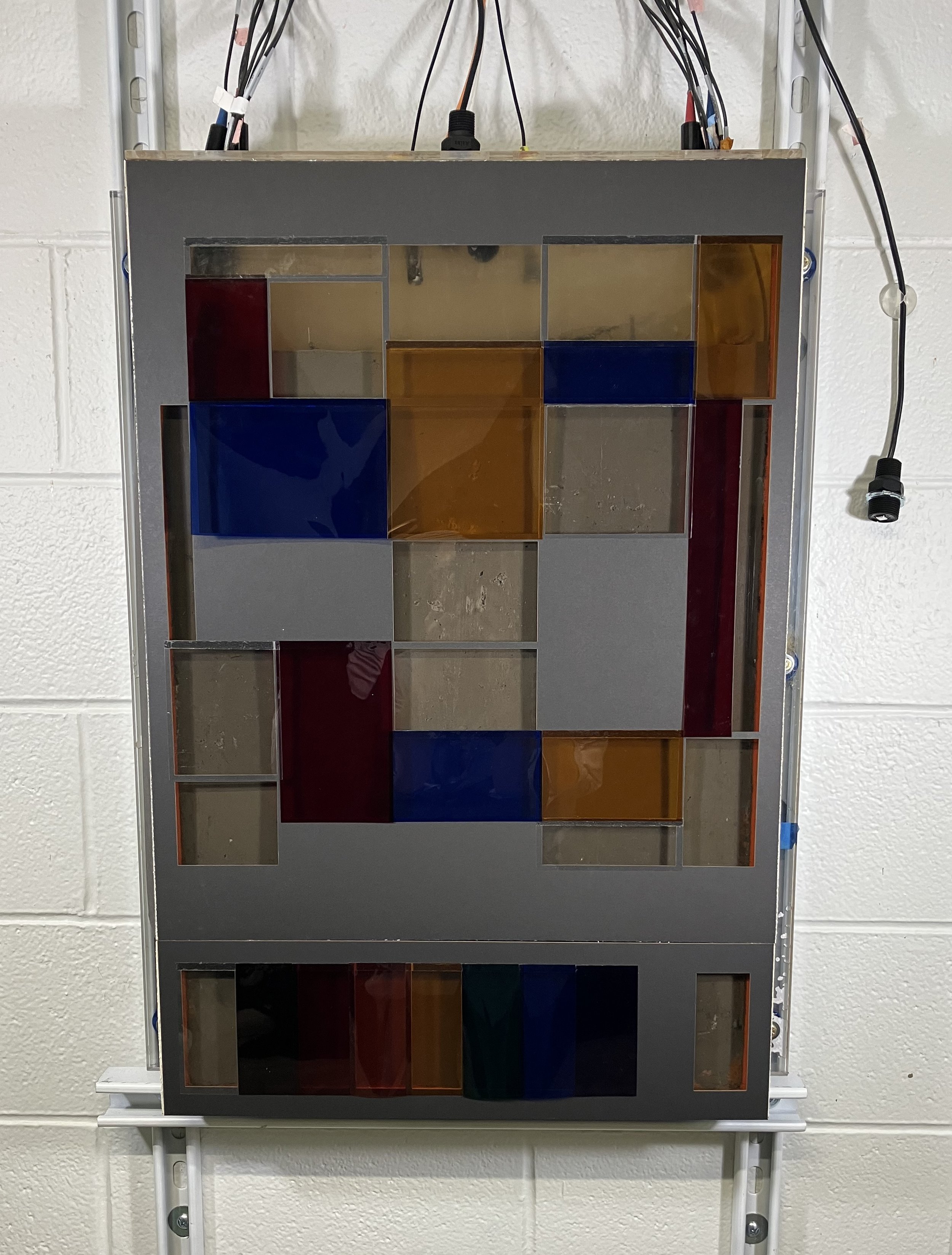
The Actual Install!
I collected the mud on May 29, 2026.
I installed the mud on May 30, 2026
It is embedded with 8 pH sensors, 8 Eh sensors, 2 CO2 sensors, 2 dissolved oxygen sensors (Note: I do not trust these DO sensors) and 1 temperature sensor!
Did you know, human breath has 40,000ppm CO2? and our atmosphere is ~400ppm. Pranksters are welcome (but think about how my brother set up the averaging algorithm so you don’t pass out trying to charge the hallway data with your CO2 rich breath!)
Why Mondrian?
Why Meta?
Meta means deep self-reference and abstraction!
Ultimately, I will destroy the painting to collect samples for
1) meta-genomics
2) meta-transcriptomics
3) metabolites
1st Mondrian proposed that his art could reduce naturalistic detail and reveal a hidden universal order. This project hopes to reveal some order in microbial ecology!
2nd Mondrian used primary colors and it turns out, most microbes make their pigments below 500nm (blue), or above 500nm (yellow), and some above 600nm (red). Will microbes paint by wavelength number?
Loads to Thank
Bob Healey (network access for sensors), Brenda Thomson (outward facing sensor data streaming), Chris Wilsey (electrical), Coburn Wightman (coding and pi buildout), Dave Konitzer (U-channel mount), John Szczesniak (laser stencil and 3d camera array buildout), Joe Sicko (3d camera array buildout), Karen Osborne (lighting), Karyn Rogers (our host!), Kathy High (my advisor!), Kevin Bradlinski (wheelbarrow), Kevin Harrington (electrical), Lee Ligon (Associate Dean of science), Nancy Wightman (Great Mom!), Rob Carney (everything site-specific), Steve Tait (Dean of Science). Have appreciated using grovestreams.com for data management, the specialists at Rosco for light filter discussions, the High CRI lights at waveform, Efrem at atlas scientific for discussing all things sensors, at Precision Plastics for making such a sturdy and wonderful plexiglass container - now in its 3 incarnation and not leaking! Amazing gasket work!
What’s Next?
Well! so many things. 1) my friend Mark Shelby Perry is coming to help photograph it (and merge the images -it’s a bear!). 2) There will be an opening soon, so stay tuned! 3) I will destroy it! Gah. and take samples to learn about what they have been doing in there!
Five Experiments, 2019
a backstory
In 2019, I made a mud painting with 5 different experiments.
1) some film from collaborator Araby Kelley to see how it might alter the original footage (it ate it away entirely!).
2) synthetic or natural silk (to see if the biofilm would ‘paint’ it). It did nothing to the synthetic silk and it completely ate up the natural silk.
3) pH paper to see if I could ‘watch’ the pH change for the first few days (it got covered with silt - but was the pre-cursor to the pH meter of this current project).
4) fish tanks nutrient meters (also were occluded by silt and were immediately useless - but was the precursor to the other sensors of this current project).
5) an experiment using theater light filters. The result: different light filters selected for different pigmented species depending on the wavelengths that passed thru the light filter. Out of the 5 experiments, this one proved fruitful! I actually had a Coalesce residency in Buffalo NY but it was during covid and I was then 8 hours away, it was installed in a window over a heater and it never got watered and so the experiment was wrecked! So this is Try 2!

Fun Facts
· The easiest place to study Astrobiology is on planet Earth.
· The earliest lifeforms on Earth are microbes (putatively identified at ~3.8 billion years old).
· On contemporary Earth, microbes have evolved traits to thrive in places that are the coldest/hottest/driest/wettest/saltiest/most acidic/most basic/highest pressure in the sea/lowest pressures on snow-capped mountains, etc. They also live on and in us and all other organisms. They are wonderful!
· They are metabolically skilled to live/evolve across a range of contexts.
· The phototrophic microbes, make pigments (to protect against UV light damage, to fend off other species, to capture light energy), and often work in collaboration with other chemotrophic microbes in diverse ecosystems.
· Piet Mondrian (1872-1944) was a Dutch abstract painter: “I wish to approach truth as closely as possible, and therefore I abstract everything until I arrive at the fundamental quality of objects.”